
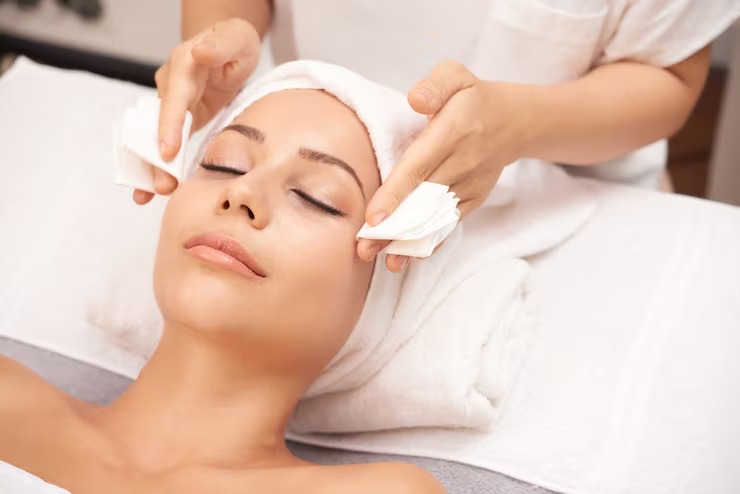
You know that feeling. You’ve found the perfect light, angled your phone just so, and with a tap of a filter, your skin looks flawless, airbrushed, and radiant. It’s a great photo. But then you catch your reflection in a mercilessly bright bathroom mirror or your car’s visor mirror under the harsh midday sun, and the reality hits. The patchiness. The dark spots from that summer holiday five years ago. The lingering redness around your nose and cheeks. The overall lack of that luminous, even-toned glow you so desperately crave.
For years, we’ve been told to slather on creams and serums, hoping for a miracle in a bottle. And while a good skincare routine is the non-negotiable foundation of skin health, when it comes to truly recalibrating uneven skin tone at its source, topical solutions often only scratch the surface.
The beauty landscape is shifting. We are moving out of the era of mere cover-up and into a revolutionary age of correction and rejuvenation. This is the world of advanced skin treatments—a world where cutting-edge technology and clinical expertise converge to deliver results that were once the stuff of science fiction.
Welcome to the new frontier of flawless skin. This is not about hiding your imperfections; it’s about erasing them for good.
Understanding the Enemy: What Really Causes Uneven Skin Tone?
Before we can solve a problem, we must first become detectives, understanding the root causes. Uneven skin tone, or dyspigmentation, isn’t a single condition but a umbrella term for a range of concerns, primarily driven by four key culprits:
Sun Exposure (Solar Lentigos): This is public enemy number one. UV radiation is a brutal aggressor that triggers melanocytes (the pigment-producing cells in our skin) into overdrive. This results in sun spots, age spots, and freckles—those stubborn brown patches that accumulate over a lifetime of sun worship (even if it was accidental!).
Post-Inflammatory Hyperpigmentation (PIH): This is your skin’s dramatic response to trauma. After a blemish, a cut, a rash, or even an overly aggressive waxing session, the skin can heal but leave behind a dark, flat mark as a souvenir. This is incredibly common and a primary concern for those with acne-prone skin.
Melasma: Often called the “mask of pregnancy,” this is a more complex hormonal hyperpigmentation that presents as symmetrical, blotchy patches on the cheeks, forehead, and upper lip. It’s driven by hormones (estrogen and progesterone) and notoriously exacerbated by sun exposure and heat.
Surface Texture & Redness: Uneven tone isn’t just about dark spots. It can also manifest as diffuse redness, broken capillaries (telangiectasia), and a rough, dull texture caused by a buildup of dead skin cells that prevents light from reflecting evenly off the skin’s surface.
The common thread? Melanin overproduction and uneven distribution. Traditional creams often work by inhibiting the enzyme (tyrosinase) responsible for melanin production. They can lighten to a degree, but they cannot address the deeper, already-clustered pigment or the textural issues that contribute to an uneven appearance.
This is where advanced skin treatments step in, moving beyond the surface to enact real, lasting change.
The Arsenal of Evenness: A Guide to Advanced Skin Tone Treatments
The world of clinical treatments can seem daunting. Let’s break down the most powerful and effective modalities, explaining not just what they do, but how and why they are so transformative.
1. The Gold Standard: Laser Toning (Q-Switched Nd:YAG Laser)
Think of this as a targeted strike with pinpoint accuracy. Q-Switched lasers deliver energy in an incredibly short, powerful pulse measured in nanoseconds. This energy is specifically attracted to the melanin pigment in unwanted dark spots.
-
How it Works: The laser beam passes harmlessly through the top layer of the skin and is absorbed by the darker target (the sunspot or patch of melanin). The rapid absorption of energy shatters the pigment into tiny, dust-like particles. Your body’s natural immune system then recognizes these microscopic particles as foreign invaders and simply flushes them away through its lymphatic system. It’s a biological clean-up crew activated by light.
-
The Result: The surrounding skin remains untouched and unharmed. With a series of treatments, the stubborn pigment is systematically broken down and removed, leading to a dramatically clearer, more even complexion. It is particularly effective for sun damage and certain types of PIH.
2. The Resurfacing Revolution: Chemical Peels
Forget the terrifying images of bright red, peeling skin you might have seen in comedies. Modern chemical peels are sophisticated, customizable, and one of the most effective ways to tackle surface-level discolouration and texture simultaneously.
-
How it Works: A controlled solution (often containing acids like Glycolic, Salicylic, Lactic, or TCA) is applied to the skin. This causes the damaged outer layers to exfoliate and eventually peel off. But the magic happens deeper. This controlled injury stimulates the dermis (the deeper skin layer) to ramp up production of fresh, new collagen and elastin. As the old, pigmented, and damaged skin sheds, it is replaced by smoother, less pigmented, and healthier skin.
-
The Result: A refreshed, brighter, and more even complexion. Peels can be tailored in strength to specifically target melanin clusters, unclog pores that contribute to PIH, and dramatically improve skin radiance. They are a powerhouse for treating textural unevenness and mild-to-moderate pigmentation.
3. The Luminous Light Therapy: IPL (Intense Pulsed Light)
Often confused with laser, IPL is actually a broad spectrum of light wavelengths, whereas laser is a single, focused wavelength. Think of IPL as a powerful flashlight and laser as a precision laser pointer.
-
How it Works: The light energy is delivered to the skin and absorbed by the melanin in dark spots or the hemoglobin in red broken capillaries. The absorbed light is converted to heat, which damages the targeted cells, causing them to break down. Similar to laser, the body then removes this debris naturally.
-
The Result: IPL is fantastic for treating a combination of issues—namely sun-induced pigmentation and diffuse redness or broken capillaries. It gives the skin an overall more uniform appearance by tackling both brown and red tones. It’s a brilliant treatment for achieving a general “brightening” effect.
4. The Cellular Renewal Powerhouse: Microneedling
This treatment proves that sometimes, you have to create a small, controlled injury to spark profound healing. Microneedling uses ultra-fine, sterile needles to create microscopic channels in the skin.
-
How it Works: The primary goal is to stimulate collagen and elastin production—the scaffolding of your skin. But how does this help pigmentation? As new, healthy skin cells are generated at an accelerated rate, they push old, pigmented cells to the surface to be shed. Furthermore, when combined with targeted serums (like Vitamin C or Tranexamic Acid), the micro-channels allow these potent brightening agents to be delivered far more deeply and effectively than topical application ever could. This is known as a “meso-faceual” and is a game-changer for stubborn melasma and PIH.
-
The Result: Improved skin texture, firmness, and a reduction in the appearance of pigmentation as the skin is essentially “resurfaced” from the inside out.
5. The Preventative Genius: Profhilo®
While often hailed for its incredible anti-ageing and hydrating properties, Profhilo® plays a crucial role in skin quality and, by extension, even tone.
-
How it Works: It is not a traditional hyaluronic acid filler. Instead, it is an injectable bio-remodelling treatment that contains a high concentration of pure, stable hyaluronic acid. It is strategically injected into specific points on the face, where it then spreads like a sheet, stimulating the body to produce four different types of collagen and elastin.
-
The Result: The skin becomes incredibly hydrated, thick, and luminous. Healthier, thicker skin is inherently more resilient, has a better barrier function, and reflects light more evenly. By improving overall skin health, Profhilo® creates a flawless canvas, making any residual pigmentation less noticeable and helping to prevent future damage.
Why the “Where” Matters: The MyFacials.co.uk Difference
Anyone can buy a laser machine. But true expertise, a nuanced understanding of skin biology, and an artist’s eye for assessment cannot be purchased. This is the critical differentiator.
A successful treatment plan is not about picking the most expensive or most aggressive option. It’s about a bespoke strategy. A skilled practitioner at a reputable clinic like MyFacials.co.uk will conduct a thorough consultation, often using advanced skin analysis technology to see what’s happening beneath the surface. They will:
-
Accurately Diagnose: Is it melasma, PIH, or sun damage? Each requires a subtly different approach.
-
Assess Your Skin Type: Certain treatments carry higher risks for darker skin tones if not performed correctly. Expertise is non-negotiable here.
-
Create a Bespoke Plan: It might be a course of laser toning, or perhaps a combination of a gentle peel followed by a course of IPL. The magic is in the customisation.
-
Prioritise Your Safety: Using medical-grade equipment in a clinical, sterile environment is paramount to achieving beautiful results without complications.
Choosing a clinic like MyFacials.co.uk means investing in a partnership—a journey towards better skin guided by knowledge, experience, and a commitment to your safety and satisfaction. It is this level of care that transforms a simple procedure into a life-changing treatment.
The Non-Negotiable Companion: Your Home Care Regimen
Advanced treatments are the accelerator, but your daily skincare is the steering wheel. To protect your investment and maximise your results, a targeted home routine is essential. Any expert clinic will provide you with a post-treatment plan, but the pillars are always:
-
A High-Performance Vitamin C Serum: Applied in the morning, Vitamin C is a powerful antioxidant that neutralises free radicals before they can trigger pigmentation. It also helps to inhibit the melanin-production process and brightens existing spots.
-
A Medical-Grade Retinoid: The gold standard for cellular turnover. Prescription-strength retinoids (like Tretinoin) work deep within the skin to accelerate shedding, prevent clogged pores, and are clinically proven to fade hyperpigmentation.
-
The Ultimate Protector: Broad-Spectrum SPF 50: This is your forcefield. There is no point in investing in advanced treatments if you are not religiously wearing SPF every single day, rain or shine. UV radiation will undo all the progress and re-trigger pigment production. Non-negotiable.
For further reading on building a powerhouse skincare routine to maintain your results, the American Academy of Dermatology Association has an excellent resource on how to create an anti-aging skincare plan.
Furthermore, understanding the ingredients in your products is key. The British Skin Foundation is a fantastic source of trustworthy information on various skin conditions and the science behind treating them.
Your Journey to Luminous, Even Skin Starts Here
The dream of waking up with filter-free, radiant, and even-toned skin is no longer a dream. It is an achievable reality, thanks to the incredible advancements in clinical skin treatments. It’s a journey of empowerment, of taking control of your skin’s health and vitality.
It’s about moving beyond concealing and into healing.
If you are ready to explore which treatment is right for your unique skin story, the first step is a conversation with an expert.
Ready to begin your transformation? Book your comprehensive, no-obligation skin consultation with the experts at MyFacials.co.uk today. Let us map your personalised path to a brighter, more confident you.
This article is for informational purposes only and does not constitute medical advice. Treatment options should always be discussed with a qualified medical professional or dermatologist during a formal consultation.